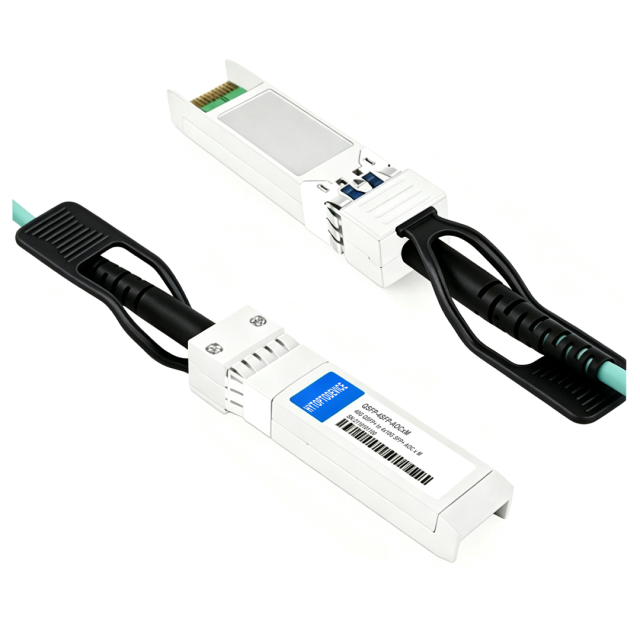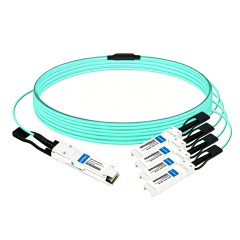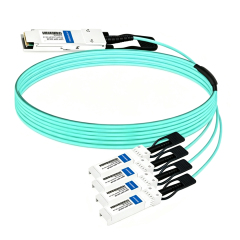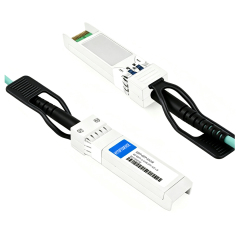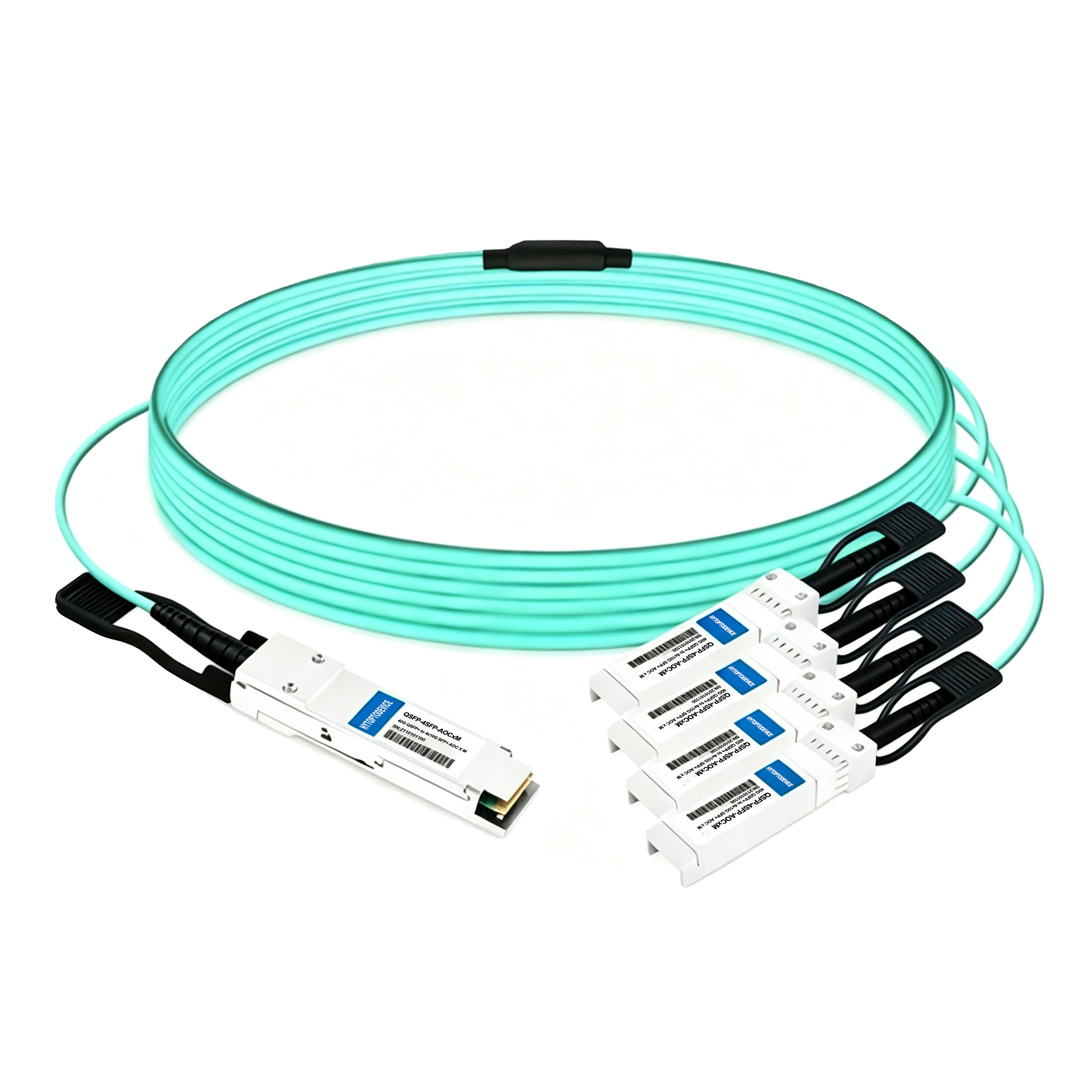
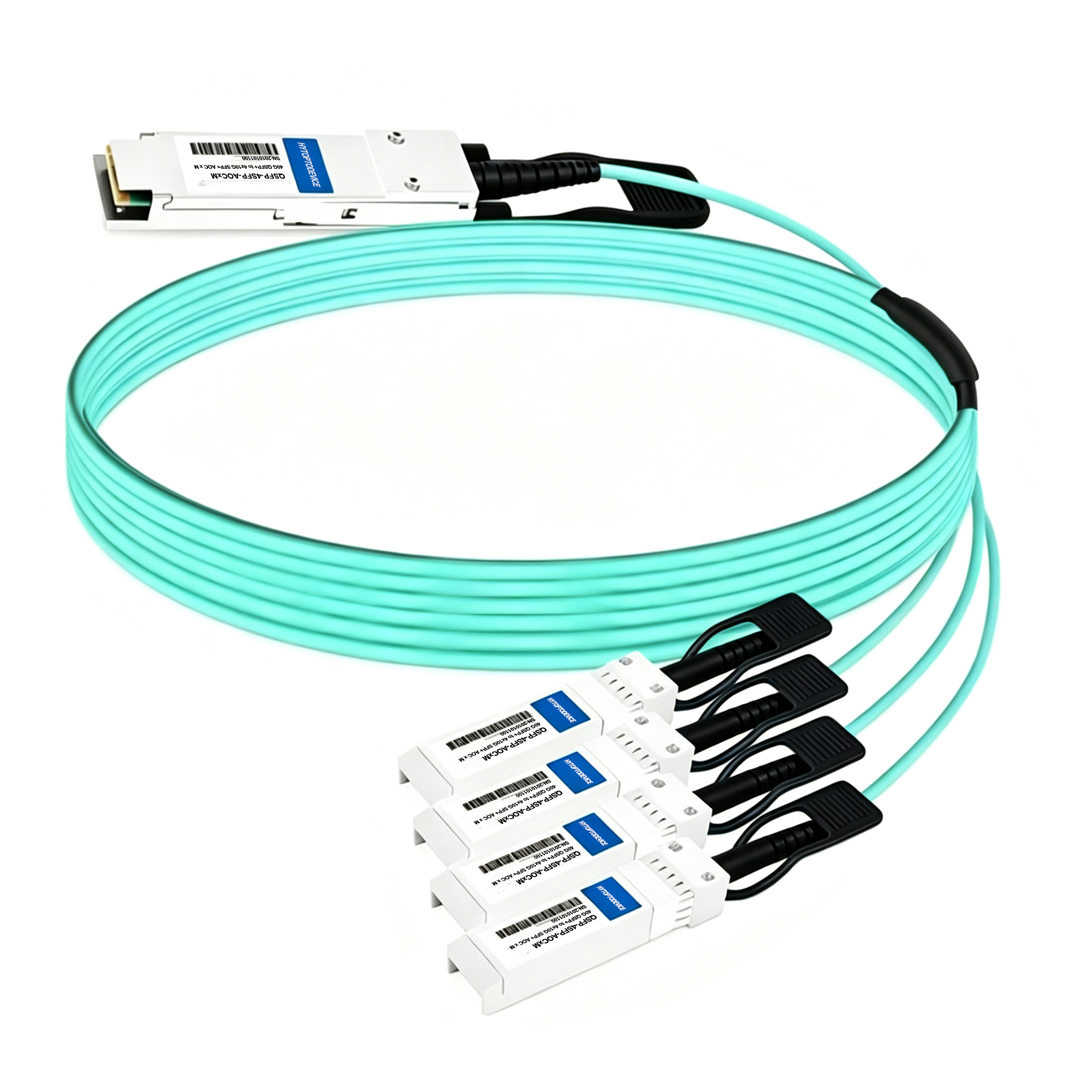
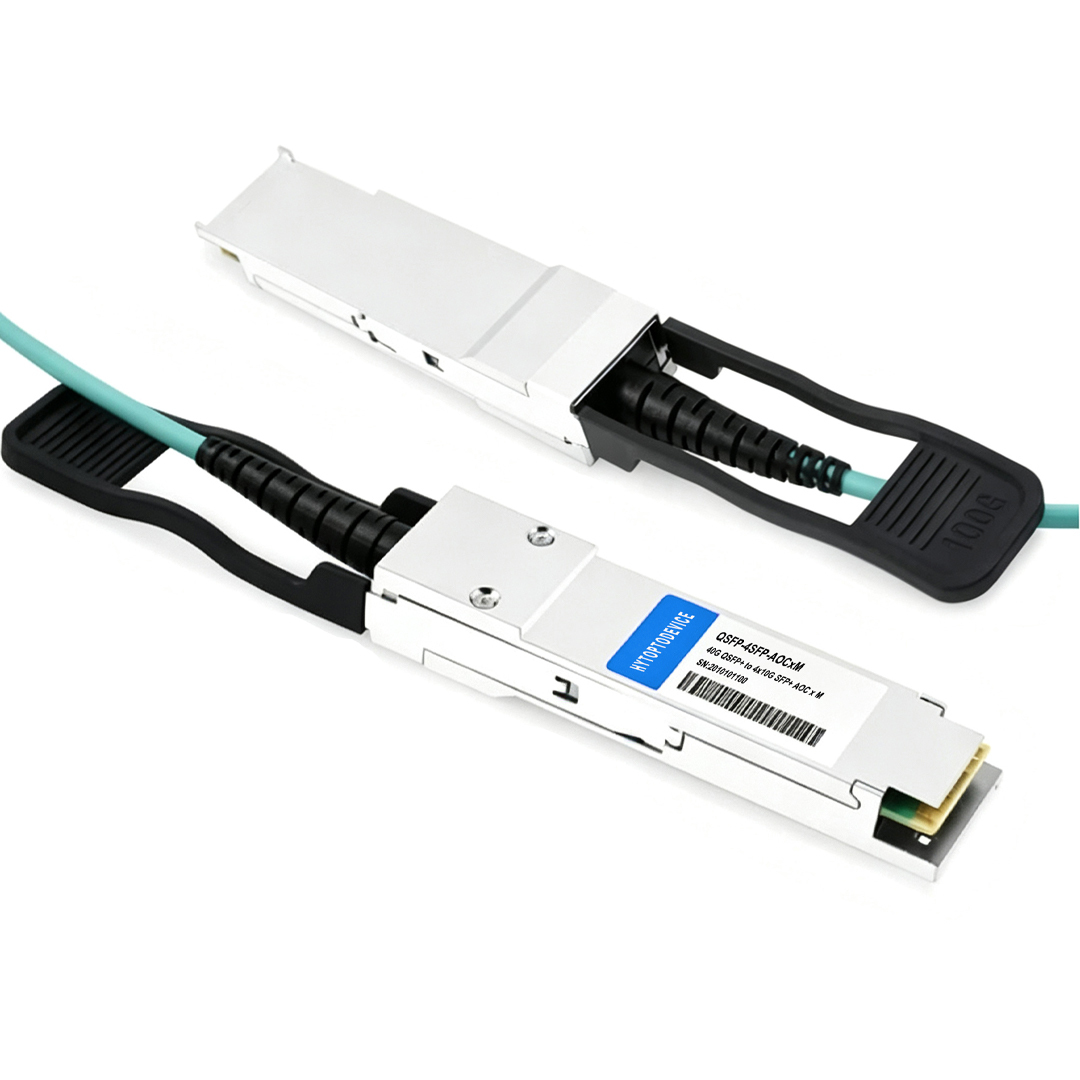
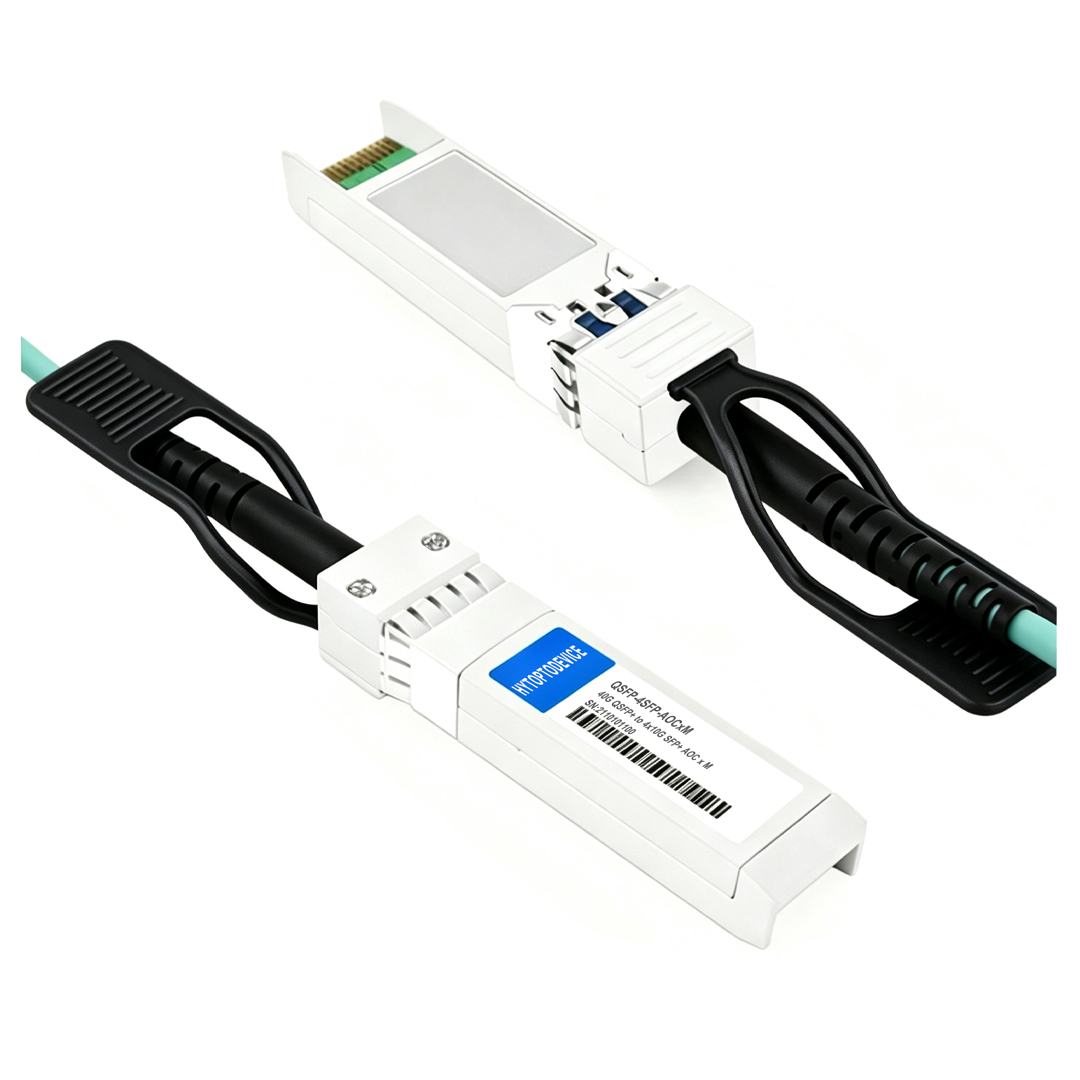
| NO. | Brand | Compatible P/N | Transceiver Type |
| 1 | Cisco | QSFP-4X10G-AOC3M | |
| 2 | Arista Networks | QSFP-4X10G-AOC3M | |
| 3 | Dell | CBL-QSFP-4X10G-AOC3M | |
| 4 | Juniper Networks | JNP-QSFP-AOCBO-3M | |
| 5 | Extreme | 10GB-4-F03-QSFP | |
| 6 | H3C | QSFP-4X10G-D-AOC-3M | |
| 7 | Brocade | 40G-QSFP-4SFP-AOC-0301 |
| Cisco Compatible |
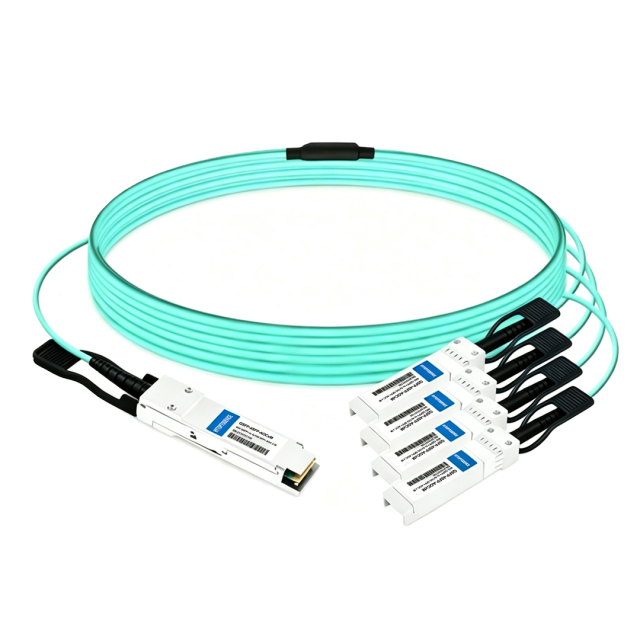
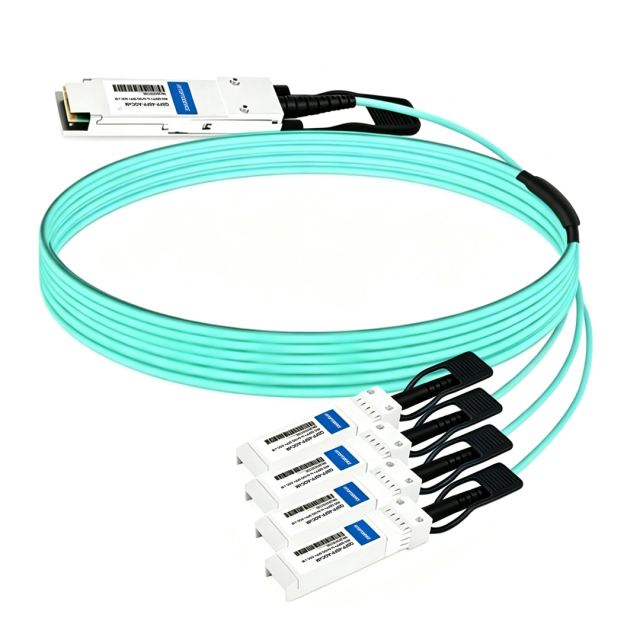
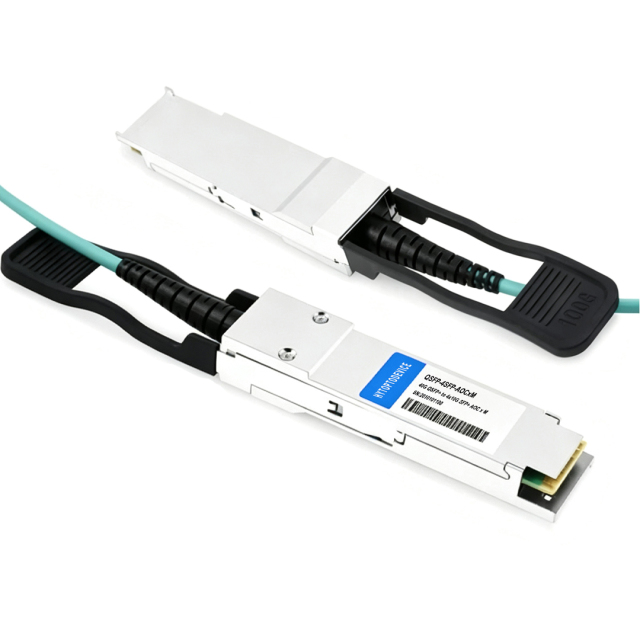
QSFP-4X10G-AOC3M
|
Vendor Name | HYTOPTODEVICE |
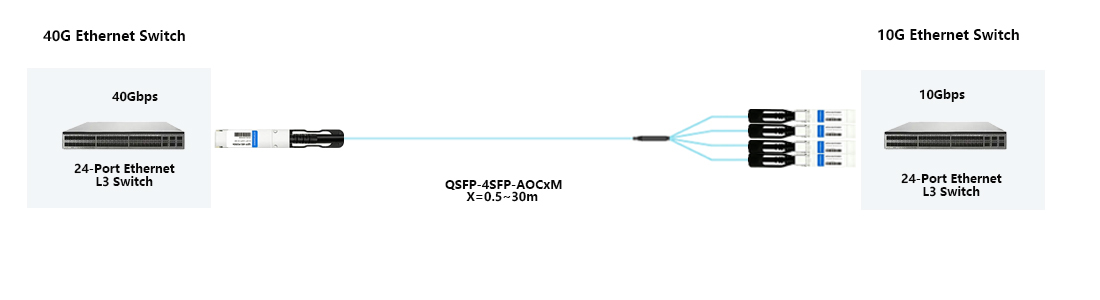
| Connector | QSFP+ to 4 SFP+ | Max Data Rate | 40Gbps |
| Operating Wavelength | 850nm | Fiber Cable | OM3 MMF |
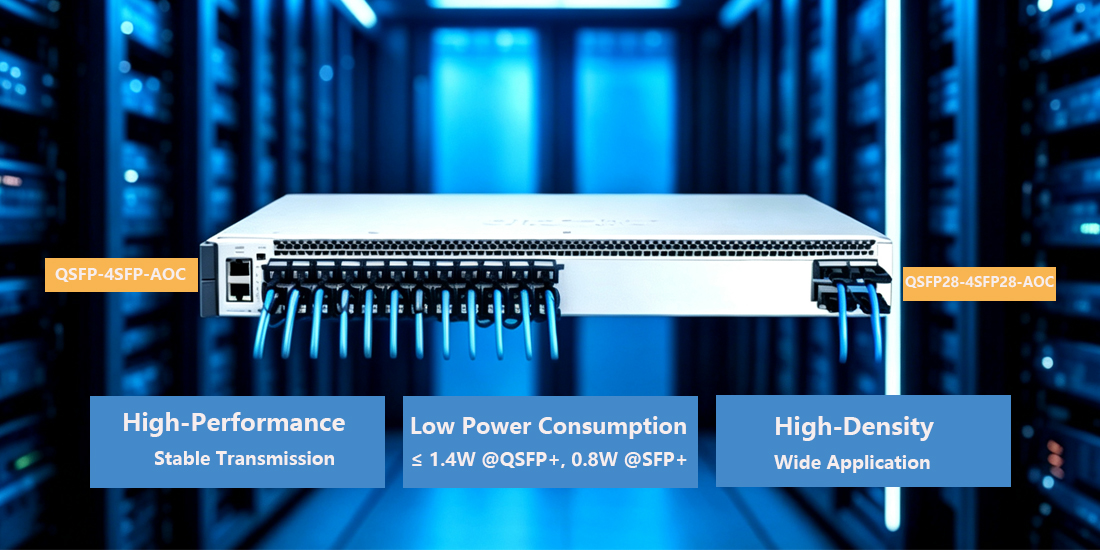
| Cable Length | 3m (10ft) | Power Consumption | ≤1.4W |
| Jacket Material | OFNP | Operation Temperature | 0~ 70 °C (32 to 158°F) |
| Minimum Bend Radius | 30mm | Protocols | 10G/40Gigabit Ethernet or Fibre Channel |
| Application |
InfinibandQDR/DDR/SDR,40G Ethernet,Data Center,Fibre
Channel
|
Warranty | 5 Years |
Usage Guidelines & Best Practices
Mandatory Port Breakout Configuration: Ensure the host QSFP+ port supports channelization. Enable breakout mode (4x10G) via the switch CLI before connecting the cable.
Cabling Requirements: Do not exceed the minimum 30mm bend radius, avoid sharp folding, heavy extrusion or long-term tension on the cable assembly.
Port Installation Standard: Do not mix this breakout AOC with straight QSFP+ to QSFP+ AOC configuration.
Hot‑swap rule:Never pull or tug directly on the individual breakout legs. Always use the integrated pull-tab or bale latch when inserting or removing connectors.
Operating Environment: 0‑70℃, indoor cabinet deployment only.
For detailed operation instructions, please refer to the User Guide.
Full Compatibility List & Supported Devices
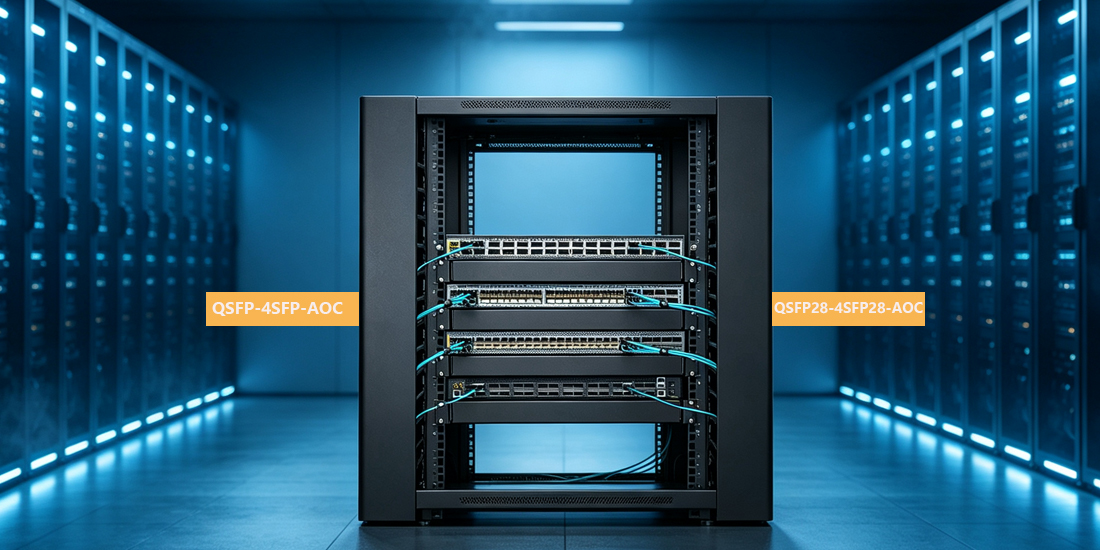
Built on MSA open standards, this cisco 40g qsfp to four sfp+ active optical breakout cables supports mixed-vendor networking devices. can interoperate with mainstream network brands including Arista, Brocade, Juniper, Dell, H3C and Fortinet, for mixed-vendor rack stacking and server fabric expansion.

Q1: What maximum transmission range can be achieved with a 40G fanout AOC solution? A: Breakout AOCs can deliver reliable links from 1m up to 100m with OM3 or OM4 multimode fiber, making these 40g qsfp+ to four sfp+ breakout active optical cables a great choice for inter-rack links where copper DACs run into signal attenuation limits.
Q2: Are breakout AOC pigtails flexible enough for dense cable tray routing? A: Yes, each individual breakout leg features a slim 2mm–3mm outer diameter. The soft fiber construction makes routing much easier compared to bulky copper breakout cables inside crowded data center cable pathways.
Q3: Can this Cisco compatible breakout AOC be deployed for outdoor cross-building connections? A: No. Standard data center AOCs are engineered only for indoor climate-controlled environments from 0°C to 70°C, without armored jacketing or waterproof treatment for outdoor exposure.
Q4: Is this 3m breakout AOC suitable for connecting hardware across different floors in a data center? A: It works if your required span is within the available AOC length range up to 100m. For permanent multi-floor connections, structured fiber cabling paired with patch panels delivers better long-term stability.
Q5: How do I prevent unsupported transceiver warnings on Cisco switches when using third-party breakout AOC? A: You need to order the variant pre-programmed with Cisco-compatible EEPROM. Wrong coding will trigger system alerts or stop the breakout ports from establishing stable Ethernet links.
Q6: Will Cisco IOS/NX-OS firmware updates disable my compatible breakout AOC unexpectedly? A: Properly built MSA-compliant AOCs usually survive routine firmware upgrades. Major security-focused firmware releases from Cisco may occasionally impose restrictions on third-party optics and cables.
Q7: Can I reflash the cable EEPROM on site if I later migrate the links to other brand switches? A: Field reprogramming cannot be done without dedicated EEPROM writing equipment. It is essential to confirm your target switch brand and coding requirement when placing bulk orders of breakout AOC.
Q8: What switch configuration is required to turn a 40G QSFP+ port into four separate 10G ports? A: Yes, manual CLI commands are required. You must activate breakout or channelization mode on the Cisco QSFP+ port before the four 10G SFP+ breakout channels can come online.
Q9: Can I connect each of the four SFP+ breakout tails to separate independent switches? A: No. All four fanout branches share one primary QSFP+ host connector and must connect to the same parent Cisco switch with the breakout-enabled 40G port.
Q10: Will hot-plugging this breakout AOC lead to switch reboot or service interruption? A: No. QSFP+ and SFP+ specs support hot-swap operation. You can plug or unplug these 40g qsfp+ to four sfp+ breakout active optical cables while the switch stays powered without causing system crashes.
Q11: What is the power consumption gap between active breakout AOC and passive copper breakout DAC? A: AOC contains optical conversion chips and lasers so it draws power, generally 1.5W to 3.5W per unit. Passive copper breakout DAC has no active electronics and consumes zero power.
Q12: What risks appear when breakout AOC is installed in poorly ventilated server racks? A: It maintains stable performance within the rated 0°C–70°C temperature window. Sealed racks with no airflow will trap heat and raise component temperature, hurting link stability.
Q13: How many plug/unplug cycles can the connector pull tab of this breakout AOC withstand? A: The pull tabs are designed for regular maintenance, supporting roughly 50–100 insertion cycles. Pulling directly on the cable jacket instead of the latch will damage the connector structure.
Q14: When is passive copper breakout DAC a better option than 40G fanout AOC? A: Choose copper breakout DAC for links shorter than 5 meters. DACs cost less, consume no power and offer stronger physical durability for short intra-cabinet wiring jobs.
Q15: What warranty terms can buyers expect for bulk orders of commercial breakout AOC? A: Reliable networking suppliers commonly offer 3-year to lifetime replacement warranty for professional-grade active optical breakout cables, and HYTOPTODEVICE provides warranty service for our 40g qsfp+ to four sfp+ breakout active optical cables.
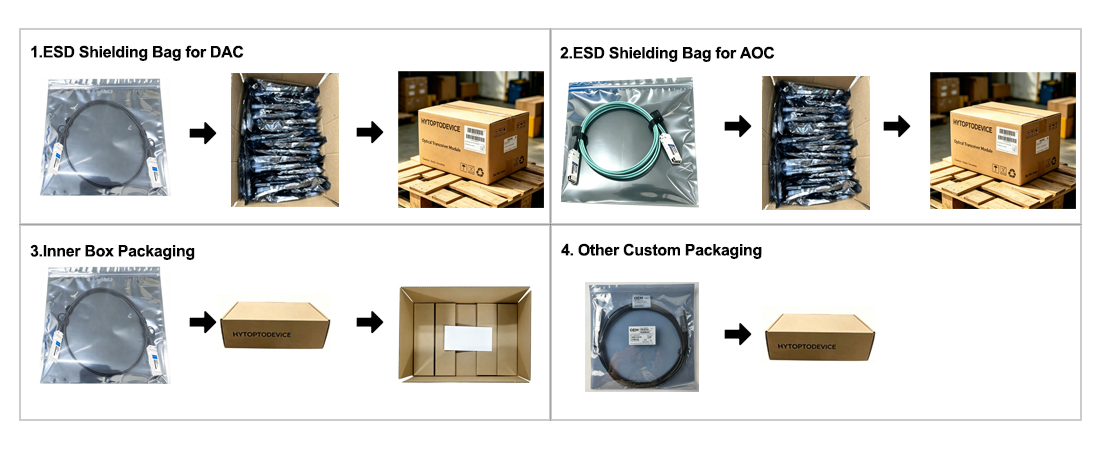
Packaging & Custom OEM Solutions
ESD Protection & Fast Shipping: Every transceiver is sealed in an ESD-safe bag and ready for same-day dispatch from stock.
Custom OEM & Branding: We provide logo printing, private labeling, and custom packaging to help distributors and integrators build their brand—no factory investment required.
Why Network Engineers Choose HYTOPTODEVICE
HYTOPTODEVICE has supplied over 5000,000 optical transceiver modules to data centers, ISPs, and enterprise networks across 100+ countries since 2011. Every module undergoes a 72-hour burn-in test and full DDM/DOM validation before shipment.
“Phenomenal performance. We deployed 200 HYTOPTODEVICE SFP modules to replace Cisco OEMs in our backbone network. Result? Zero compatibility issues and a 60% reduction in costs. Highly recommended for mission-critical networks."— Senior Network Engineer, Regional Telecom, Australia
Quality Certification & Compliance
At HYTOPTODEVICE, our quality commitment is backed by industry-standard validations. From fiber optical transceiver manufacturing to final visual inspection, from IQC、IPQC、FQC to OQC, our processes ensure global compliance and reliability.
We adhere to rigorous standards for our SFP modules and network solutions:
ISO 9001: Certified quality management and production consistency.
CE & FCC: Fully compliant for seamless Global Market Access.
RoHS: Committed to environmental responsibility and hazardous material control.
Proven Reliability: Rigorous testing to reduce compliance risk and ensure safety.
Certified Quality. Global Standards. Guaranteed Performance.