Q1: What is a 100G QSFP28 Single Lambda FR1 transceiver?
A1: The 100G QSFP28 FR1 is a single-wavelength PAM4 optical transceiver designed for 2km medium-reach data center transmission. HYTOPTODEVICE Cisco-compatible 100G FR1 modules adopt premium Broadcom DSP chip solution, converting 4×25G NRZ electrical signals to single-channel 100G PAM4 optical signals. Fully compliant with IEEE 802.3cd and 100G Lambda MSA standards, it delivers simplified, low-cost 100G networking for Cisco enterprise and cloud data centers.
Q2: What does FR stand for in 100G FR1 transceiver specification?
A2: In 100G optical networking, FR stands for Far Reach, representing a standard single-lambda transmission specification optimized for 2km OS2 single-mode fiber links. HYTOPTODEVICE 100G FR1 modules strictly follow official FR1 definition, featuring dedicated 1310nm wavelength, built-in FEC error correction and PAM4 modulation, perfectly matching Cisco QSFP-100G-FR standard deployment requirements.
Q3: What are the core differences between 100G FR1, 100G DR and 100G LR1 transceivers?
A3: The three 100G single-lambda modules differ mainly in transmission distance and application scenarios. 100G DR supports 500m short-reach rack-to-rack connection, 100G FR1 supports 2km medium-reach inter-floor and inter-building links, while 100G LR1 covers 10km long-distance transmission. HYTOPTODEVICE 100G FR1 strikes the best balance of cost, distance and performance, making it the most cost-effective choice for mainstream 2km Cisco data center interconnections.
Q4: Why is 100G FR1 transceiver better than traditional 100G CWDM4 for 2km links?
A4: Compared with traditional 4-wavelength 100G CWDM4 modules, HYTOPTODEVICE 100G FR1 adopts advanced single-lambda architecture with fewer optical components, lower failure rate and simpler duplex LC cabling. It eliminates complex wavelength multiplexing structures, reduces deployment and maintenance costs, and provides more stable 2km PAM4 transmission with lower latency, perfectly replacing CWDM4 for modern Cisco leaf-spine data center networks.
Q5: Can HYTOPTODEVICE 100G FR1 modules support direct 400G breakout interconnection?
A5: Yes. HYTOPTODEVICE Cisco-compatible 100G FR1 transceivers support standard 400G FR4 breakout networking. One 400G FR4 port can be split into four independent 100G FR1 links, enabling seamless docking with 400G switches. This allows enterprises to reuse existing fiber and Cisco hardware for phased 100G-to-400G upgrades without full network reconstruction.
Q6: Can 100G FR1 transceiver achieve normal interoperation with 100G CWDM4 modules?
A6: No direct interoperation is supported. 100G FR1 uses single-wavelength 1310nm PAM4 modulation, while 100G CWDM4 adopts four-channel coarse wavelength division multiplexing. The two signal mechanisms and wavelength structures are incompatible. HYTOPTODEVICE recommends unified deployment of 100G FR1 modules for 2km links to ensure consistent link stability and avoid network negotiation failures.
Q7: Are 100G FR1 transceivers compatible with 100G LR4 and 100G ER4 optical modules?
A7: No mutual compatibility. 100G FR1 is a single-lambda PAM4 medium-reach solution, while LR4/ER4 are multi-channel NRZ long-reach modules with different modulation modes, wavelength bands and port protocols. HYTOPTODEVICE 100G FR1 modules are independently optimized for 2km medium-distance scenarios, ensuring targeted stability and cost advantages for Cisco mid-range data center links.
Q8: Will old-generation Cisco 100G switches identify 100G FR1 transceivers normally?
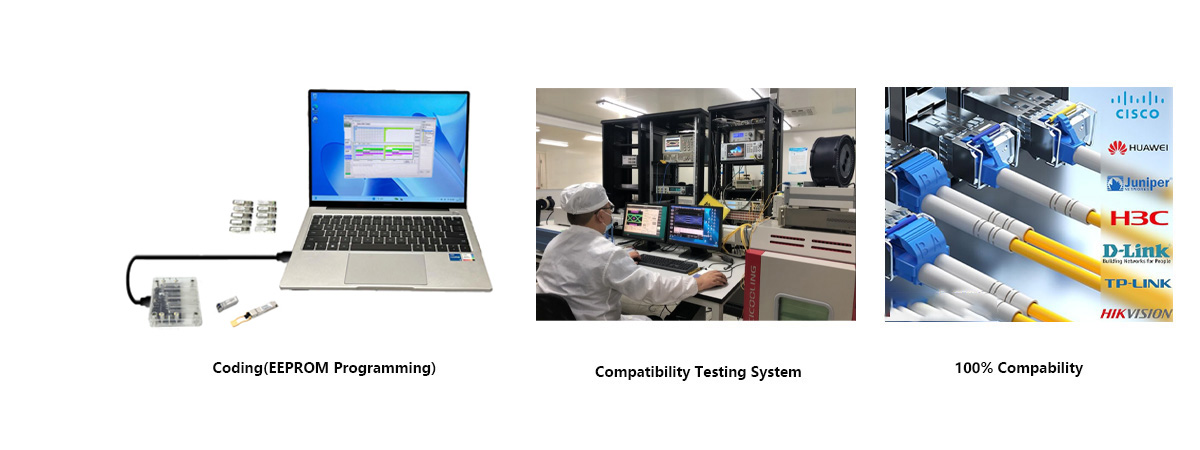
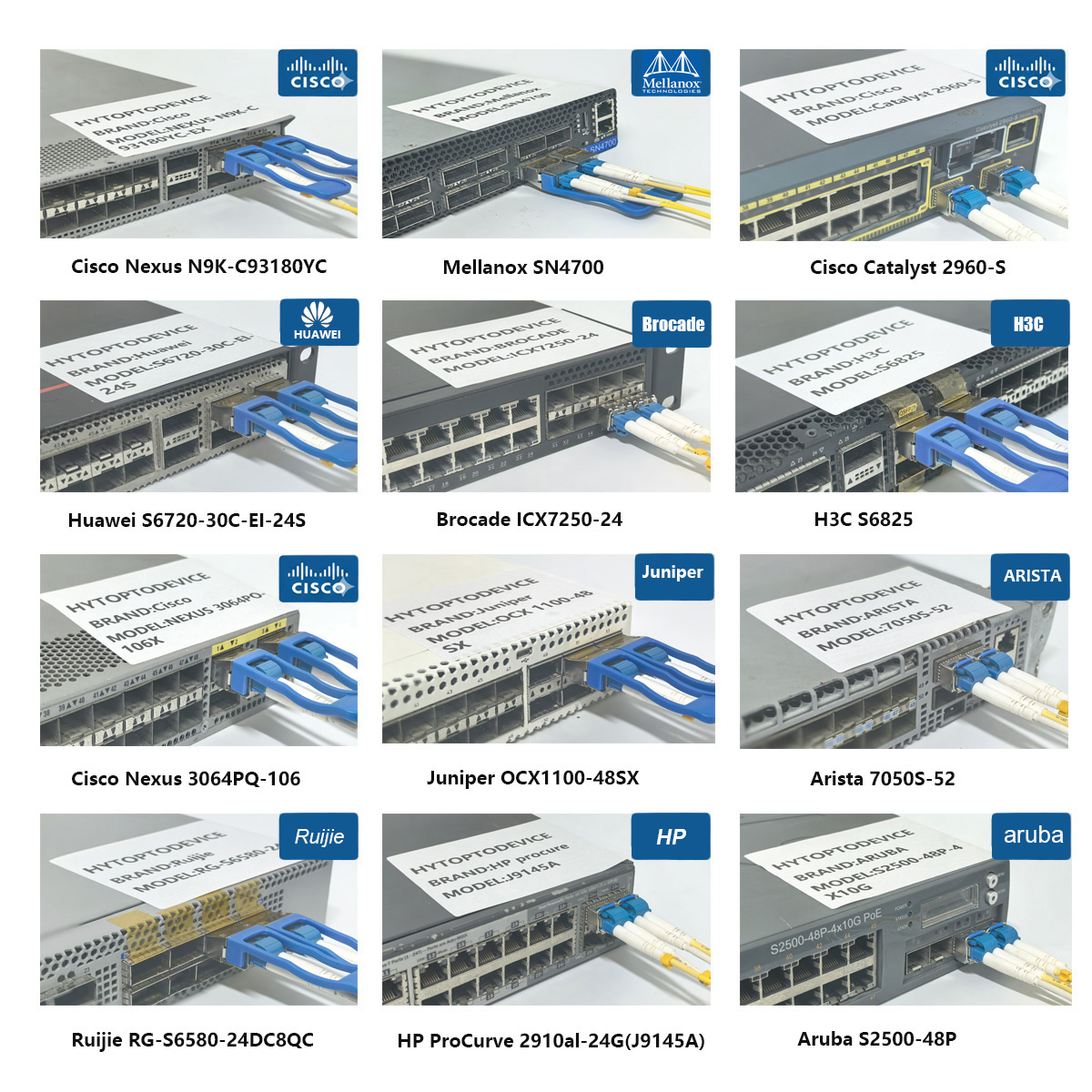
A8: Yes. All HYTOPTODEVICE 100G FR1 modules are pre-flashed with exclusive Cisco-adapted EEPROM firmware and pass real-machine testing on legacy and new Cisco Nexus/Catalyst series switches. It achieves zero-alarm plug-and-play recognition, completely avoiding unrecognized module errors, port lockdowns and link flapping on traditional Cisco 100G switching platforms.
Q9: Does higher optical output of 100G FR1 cause higher power consumption than 100G DR modules?
A9: No. Although 100G FR1 provides higher optical power for 2km long-distance transmission, HYTOPTODEVICE optimizes the Broadcom DSP chip power management scheme. The actual power consumption is controlled within 4.0W, almost consistent with 100G DR modules. It avoids excessive heat generation, effectively reducing Cisco switch port load and data center PUE.
Q10: Does the built-in DSP chip of HYTOPTODEVICE 100G FR1 bring obvious network latency?
A10: No noticeable latency increment. The integrated Broadcom DSP chip of HYTOPTODEVICE 100G FR1 modules features ultra-low-delay signal conversion and real-time FEC error correction algorithm. It completes 4×25G NRZ to 100G PAM4 signal switching in microseconds, ensuring ultra-low-latency transmission, fully meeting low-delay service requirements for Cisco cloud computing, AI and virtualization data center scenarios.